Corfu Island Cuisine
Corfu’s cuisine is a rich blend of Mediterranean tradition and Venetian influence—spicier, more aromatic, and often more indulgent than mainland Greek food.
Cooking tradition
Corfiot cooking is defined by slow preparation, deep flavors, and ritual-like home cooking—especially on Sundays.
Many dishes are built around long marination and slow simmering in one pot, a tradition dating back centuries.
Key herbs and spices include: oregano, garlic, onion, parsley, basil, dill, mint (peppermint and spearmint), cinnamon.
The strongest culinary influence comes from Venice, shaping both techniques and flavors during centuries of rule.
Iconic Dishes
Sofrito
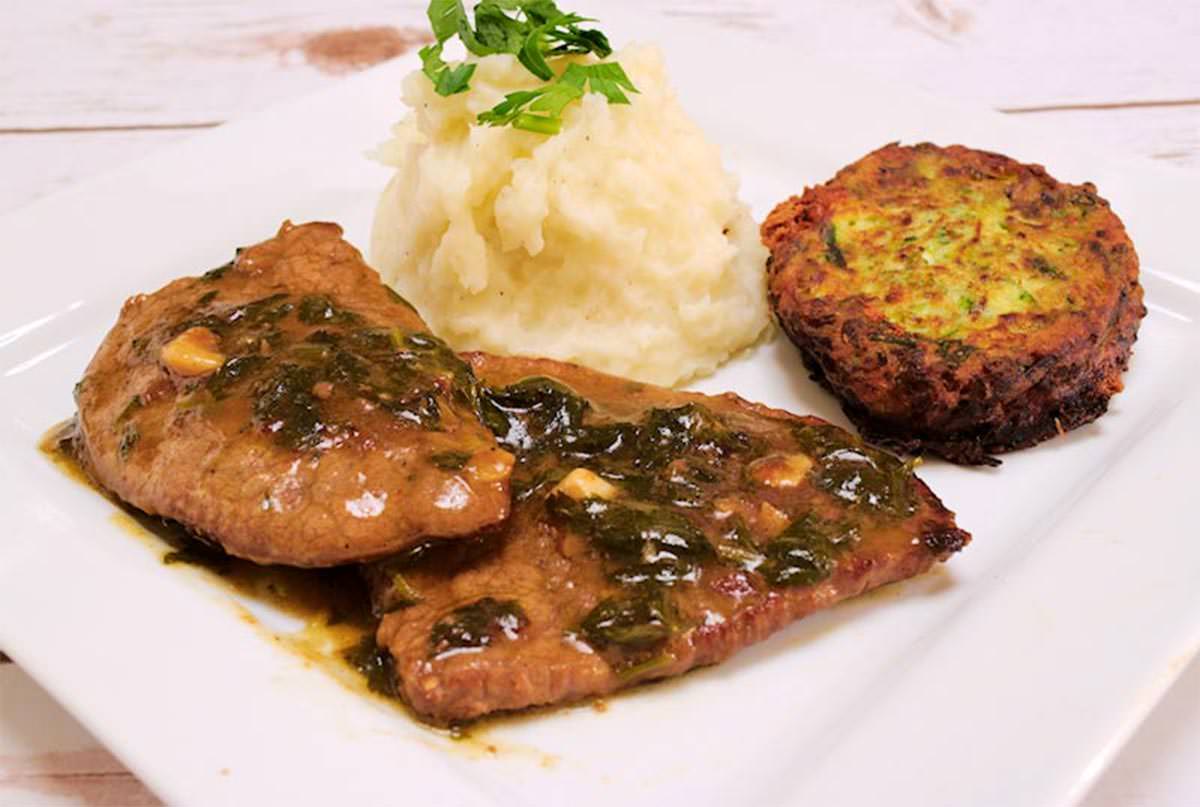
Thin slices of veal, lightly fried and slow-cooked in a white sauce of garlic, parsley, white wine, vinegar, and pepper. Typically served with mashed potatoes. The name comes from the Italian “so fritto”.
Pastitsada
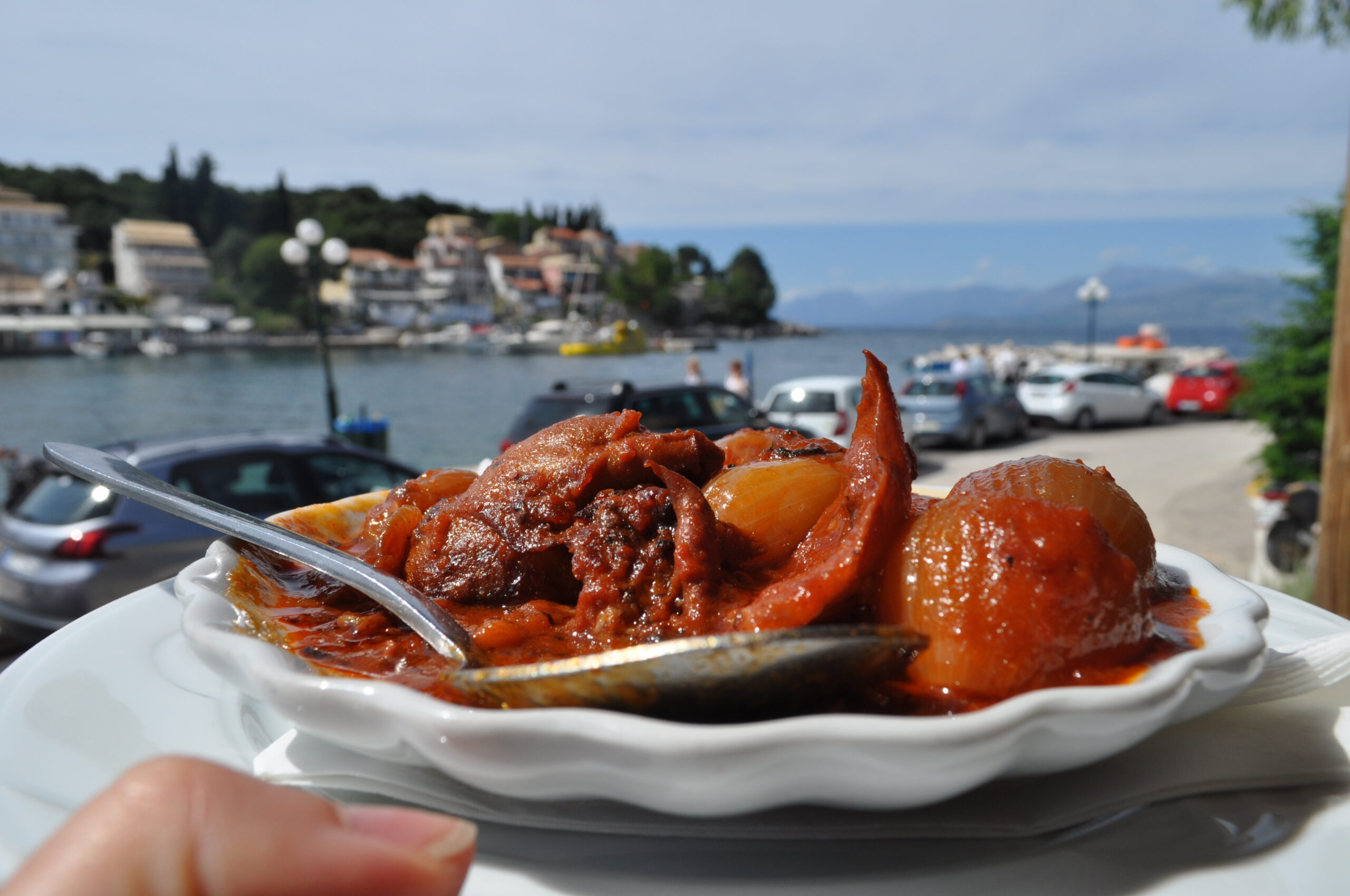
The island’s most festive dish: pasta with rooster, beef, or veal, cooked in a rich tomato-based sauce with wine, cloves, cinnamon, garlic, onions, and a signature spice blend (spetseriko). Traditionally served at celebrations.
Bourdeto
A bold red fish stew made without tomato—its color comes from red pepper and chili. Typically made with scorpionfish or sea bass.
Bianco
A lighter dish of fish cooked with potatoes, garlic, lemon, parsley, and white pepper. The sauce is white and best enjoyed with bread.
Tsigareli
Wild greens sautéed with onion, garlic, chili, and olive oil. Simple, spicy, and especially popular in winter.
SWEETS & SPECIALITIES
- Sycomaida – fig-based sweet with ouzo, mastic, and wine, wrapped in walnut leaves
- Kumquat spoon sweets – signature Corfiot preserve made from the island’s iconic fruit
- Nouboulo (Corfu prosciutto) – pork cured in wine, smoked, and wrapped in herbs
- “Bolsheviks” pastry – syrupy bun-style dessert found in select old town bakeries
DRINKS & LOCAL PRODUCTS
- Homemade tavern wine is common across the island
- Local beers are brewed in the Arillas area
- Tsitsimbira (Imperial beer) arrived with the English in the 19th century and remains a local specialty
HISTORICAL NOTES
Corfu was one of the first Greek regions to adopt ingredients like potatoes, legumes, cocoa, and exotic spices due to Venetian trade networks.
- Turkey likely arrived via French influence (“galopoula” = “French bird”)
- Puddings became popular during British rule in the 19th century
- Wealthy households enjoyed elaborate cuisine, while rural diets were simpler: greens, cod, olive oil, and bread
CHARACTER OF CORFIOT CUISINE
Corfiot food is not strictly spicy or mild—it is layered, aromatic, and deeply Mediterranean.
Core elements:
- Olive oil
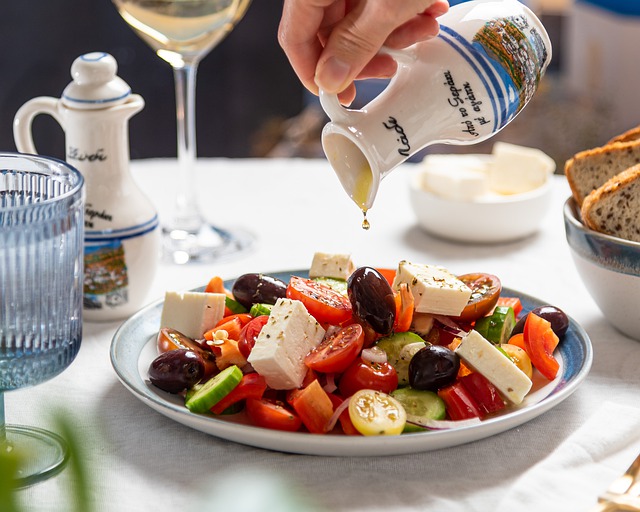
- Fresh vegetables and wild greens
- Pasta (especially orzo)
- Aromatic herbs and spices
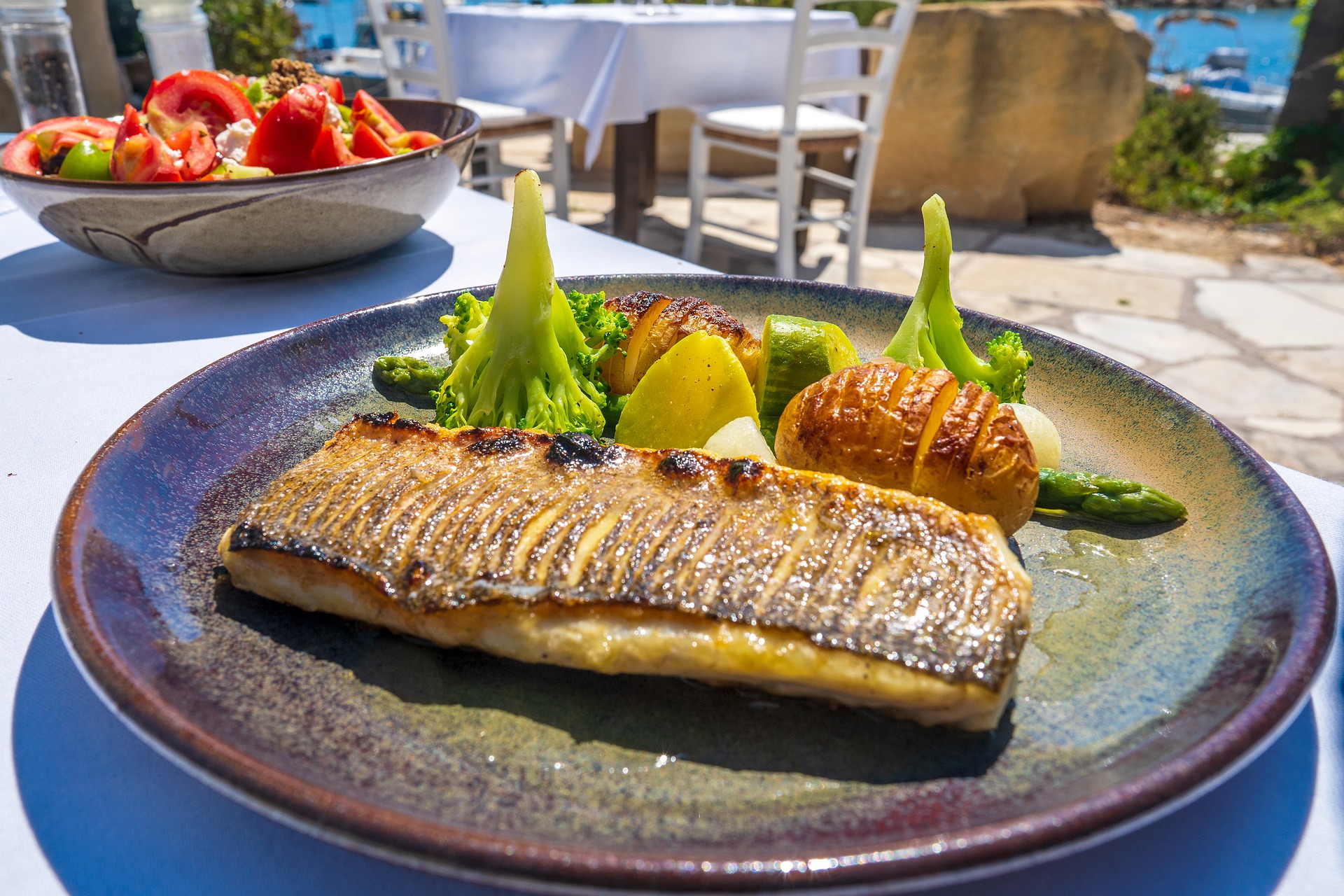
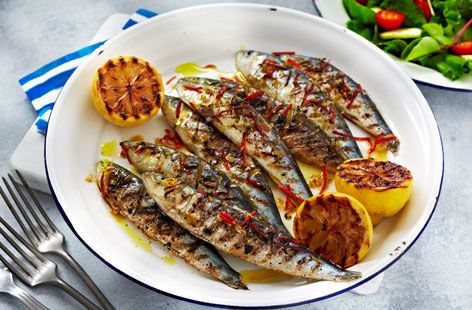
- Whole fish, often fried or baked with head and tail intact
Thin pastry (filo) is widely used for savory pies like cheese and spinach pastries.
FINAL THOUGHT
Corfu cuisine is not just food—it’s history on a plate, shaped by centuries of cultural overlap, trade, and island life.